
Why Security Anti-Theft Alarm Display Tablet Demand Is Growing
The growing use of tablets in retail, service counters, and interactive product demonstrations is creating new demands for device protection. Security Anti-Theft Alarm Display Tablet systems reflect a wider shift toward open displays that allow hands-on interaction while helping reduce the risk of unauthorized removal.
Open Retail Displays Bring New Security Challenges
Electronics stores increasingly allow visitors to handle tablets instead of viewing them exclusively through glass cabinets. Direct interaction helps people explore touchscreen functions, test applications, compare screen quality, and understand device features.
However, open access also introduces practical concerns. Tablets are portable, relatively valuable, and frequently positioned in areas with substantial foot traffic. Staff may not be able to monitor every device continuously, particularly in large stores or busy demonstration zones.
Traditional locked cabinets provide physical separation but can interrupt the testing experience. Unprotected displays offer greater freedom but may create additional security risks. This tension is encouraging interest in display equipment that combines accessibility with electronic protection.
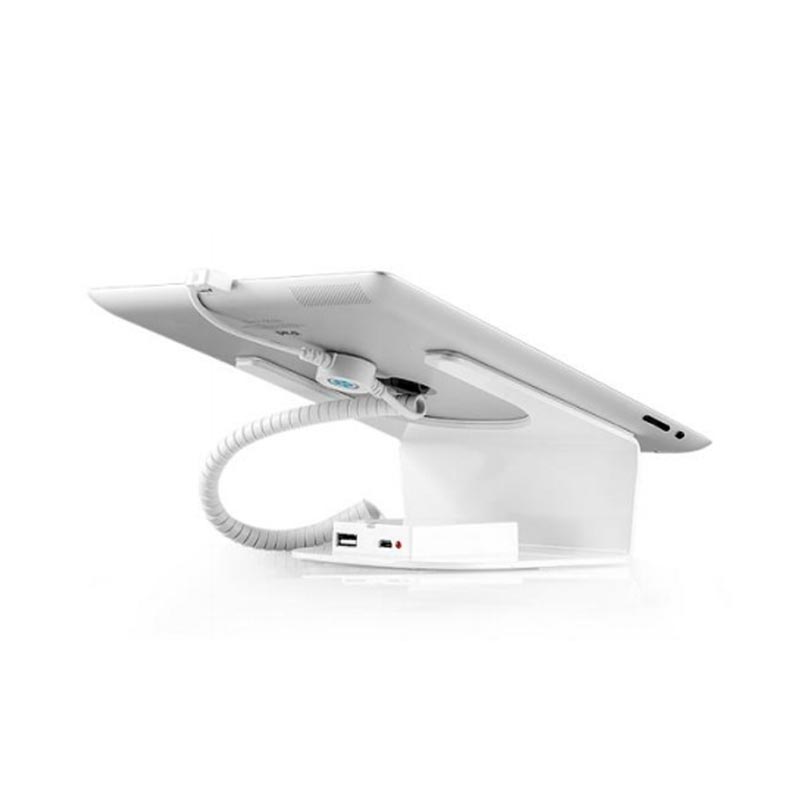
Why Integrated Alarm Systems Are Gaining Attention
An alarm-equipped tablet display combines a mounting structure with electronic security components. Depending on the configuration, sensors can detect certain forms of disconnection or unauthorized movement and activate an audible alert.
The purpose is not to eliminate every possible security risk. Instead, these systems add another layer of protection while allowing devices to remain accessible for demonstrations.
Three Factors Behind Growing Demand
More hands-on product demonstrations. Tablets are commonly used to demonstrate applications, digital services, and connected technologies. Open displays make these experiences easier to deliver, increasing the need for suitable protection.
Greater attention to unattended devices. In busy retail environments, staff attention is divided among customer assistance, transactions, and daily operations. Alarm-equipped displays can help alert staff to specific security events without requiring constant visual monitoring.
Cleaner and more organized presentation. Integrated mounting and cable management can reduce loose connections and clutter. When charging is supported, devices can remain available for extended demonstrations while maintaining a tidier counter.
How Display Requirements Differ by Location
Security needs vary according to the environment, device value, visitor volume, and level of supervision.
| Display Environment | Main Requirement | Important Consideration |
|---|---|---|
| Electronics retail stores | Hands-on testing and theft prevention | Easy access with appropriate alarm coverage |
| Shopping mall kiosks | Protection in busy public areas | Stable mounting and clear staff visibility |
| Service counters | Convenient access to digital interfaces | Organized cables and simple daily operation |
| Technology exhibitions | Frequent demonstrations | Portability, installation, and repeated use |
| Business presentation spaces | Continuous device availability | Charging arrangements and a neat appearance |
This variation explains why display equipment cannot be evaluated by its alarm function alone. Mounting stability, device compatibility, cable routing, and ease of operation all affect its practical value.
Design and Manufacturing Influence Performance
A Security Anti-Theft Alarm Display Tablet system brings together mechanical components and electronic functions. The mounting structure must hold the device securely while allowing comfortable screen access. Sensors and alarm components need to work with the intended configuration, and cables should not interfere with normal use.
These requirements connect retail security equipment with several manufacturing disciplines, including injection molding, metal processing, structural design, and electronic testing.
Ningbo Pyets Electronic Technology Co., Ltd has worked in electronic anti-theft devices and retail display equipment since 2011. Its product range includes anti-theft hooks, mobile phone display stands, steel wire pullers, and open display equipment. The company operates injection molding machines, precision punching machines, automated production lines, and mold-processing and testing equipment. It also reports more than 30 invention and utility patents across its anti-theft product series.
This background reflects the technical coordination involved in display development. A practical design must consider not only how the alarm responds, but also how the device is mounted, powered, handled, and maintained throughout daily use.
What Is Changing in Retail Security Displays?
Retail security is increasingly being considered as part of the customer experience rather than as a separate layer added after product placement. The next stage of development is likely to emphasize flexible mounting, improved cable management, straightforward alarm operation, and compatibility with different devices.
Lighting and charging integration may also influence display design. LED lighting can help define product areas, while organized power connections support continuous demonstrations. These functions are most useful when they improve visibility and usability without adding unnecessary complexity.
For stores planning an open display area, the key questions remain practical: Can visitors use the device comfortably? Can staff respond to alarms promptly? Is the mounting structure suitable for repeated handling? Can the equipment be maintained without disrupting normal operations?
Industry Outlook
Demand for tablet security displays is closely linked to the growth of interactive retail and the need to manage portable electronic devices in public spaces. Alarm functions, stable mounting, and organized charging can help address everyday operational challenges, but their effectiveness depends on appropriate design and use.
As more businesses incorporate tablets into demonstrations, service delivery, and digital experiences, the Security Anti-Theft Alarm Display Tablet represents the broader movement toward combining device accessibility with structured security management. For the retail display industry, this shift is less about adding alarms alone and more about designing equipment that supports protection, usability, and efficient store operations together.
Previous:No News
Send Inquiry


X
We use cookies to offer you a better browsing experience, analyze site traffic and personalize content. By using this site, you agree to our use of cookies.
Privacy Policy