
How Does A Mobile Phone Anti-theft Display Stand Work With A Security Cable And A Base?
Ningbo Pyets Electronic Technology Co., Ltd Mobile Phone Anti-theft Display Stand technology is reshaping how retail display security systems integrate cables, bases, and smart alarms in modern stores, especially for 3C digital environments.
In many retail environments today, product presentation and security are no longer separate concerns. Devices must remain accessible for interaction while still being protected from loss or tampering. This balance has driven the evolution of structured display systems that combine mechanical restraint, electronic sensing, and modular bases into a unified setup. Among these, anti-theft display solutions for mobile devices have become a key focus due to the high value and portability of smartphones.
Understanding the Core Structure Behind Modern Anti-Theft Displays
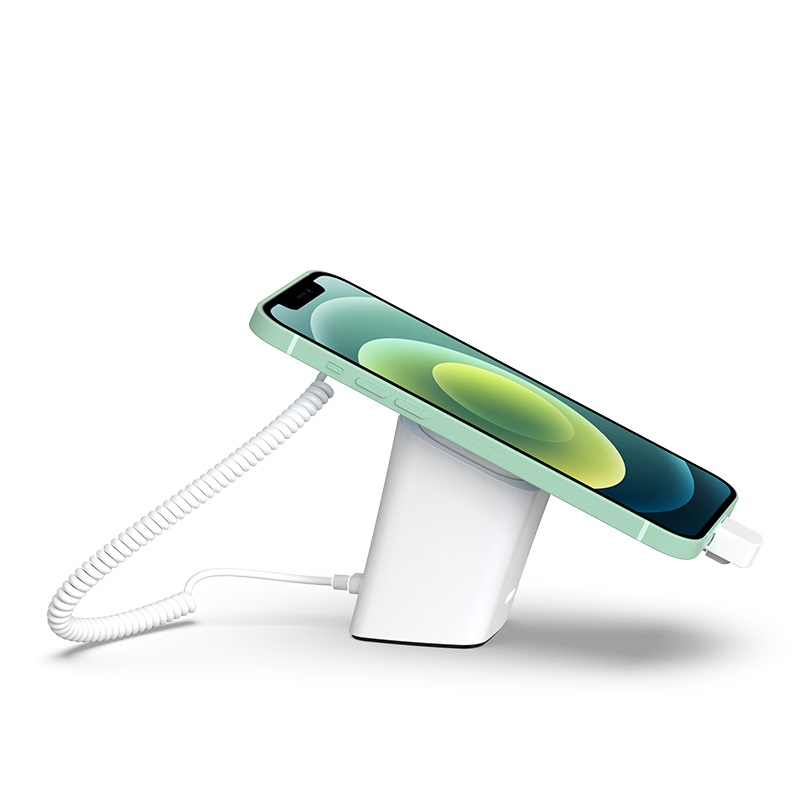
At the center of the system is a compact device holder that connects three essential components: a base platform, a retractable or fixed security cable, and an alarm module. These elements work together to allow hands-on customer interaction while maintaining physical and electronic control over the displayed device.
A typical setup is designed so that the mobile device rests on a stable base, which also houses power management or charging circuits. The security cable connects the device to the base, acting as both a physical restraint and a data/power conduit in some configurations. When combined with a detection system, any unauthorized removal or cutting triggers an alert.
This structure is especially important in high-traffic environments where multiple device models are displayed simultaneously. The system ensures that interaction does not compromise safety.
How the Security Cable and Base Work Together
The interaction between the cable and base is the core functional relationship in these systems. The base is not just a physical stand; it is the control hub. It manages power supply, alarm activation, and sometimes even charging regulation.
The cable, on the other hand, performs multiple roles:
- Physical anchoring of the device
- Transmission of low-voltage power for charging
- Trigger line for tamper detection
- Flexible movement allowance for customer interaction
When a device is lifted beyond a safe range or disconnected, sensors embedded in the base detect the change in resistance or circuit continuity. This activates an alarm response, which may include sound alerts and LED flashing indicators.
In more advanced configurations, the cable itself is reinforced with anti-cut materials, ensuring that even mechanical interference triggers immediate detection.
Functional Flow of a Mobile Anti-Theft Display System
To better understand the mechanism, the following table outlines the typical operational stages:
| Stage | System Behavior | Purpose |
| Idle Mode | Device rests on base, cable maintains connection | Stable display and charging |
| Interaction Mode | User lifts device within allowed range | Allows customer handling |
| Boundary Detection | Cable tension or signal change detected | Prevents over-extension |
| Alert Mode | Alarm sound + LED activation | Signals unauthorized action |
| Reset Mode | Device returned to base | System returns to standby |
This structured flow ensures that customer engagement remains uninterrupted while maintaining continuous protection.
Why Retail Environments Rely on Integrated Display Security
Modern digital product displays are no longer static showcases. Consumers expect to hold, test, and explore devices before making decisions. This behavioral shift has increased the need for systems that support "interactive safety."
A well-designed Mobile Phone Anti-theft Display Stand allows:
- Continuous charging during display hours
- Stable positioning across different device sizes
- Real-time security response without staff intervention
- Visual enhancement of product arrangement
The integration of charging and alarm functions into a single base unit reduces clutter and simplifies installation, especially in compact retail environments.
Design Considerations in Real-World Applications
In practical usage, several design factors influence system performance. These include material selection, cable elasticity, alarm sensitivity, and compatibility with different device dimensions.
Materials such as PC+ABS are commonly used due to their balance between durability and lightweight structure. This is particularly useful in environments where displays are frequently rearranged.
Another key consideration is alarm calibration. If sensitivity is too high, normal customer interaction may trigger unnecessary alerts. If too low, the system may fail to detect real interference. Therefore, balanced tuning is essential.
Comparison of Key Functional Features
| Feature | Basic Display Stand | Integrated Anti-Theft System |
| Device Security | Low | High |
| Customer Interaction | Medium | High |
| Charging Capability | Optional | Standard |
| Alarm Function | None | Sound + LED |
| Cable Integration | No | Yes |
| Maintenance Needs | Low | Moderate |
This comparison highlights how integrated systems enhance both usability and protection without sacrificing accessibility.
The Role of Electronics in Display Stability
Beyond mechanical design, electronic control systems play a crucial role. Voltage regulation ensures that connected devices receive stable 5V power, preventing overheating or inconsistent charging behavior.
In systems like the G1040 configuration, alarm outputs typically combine audible signals with visual indicators such as flashing LED lights. This dual-alert system increases response visibility in noisy environments.
Infrared remote unlocking is another practical feature that simplifies authorized resets without physically accessing internal components. This reduces downtime when devices are repositioned or replaced.
Real-World Challenges Solved by Anti-Theft Display Engineering
Retail environments often face several operational challenges:
- High customer traffic leading to accidental device displacement
- Cable wear due to continuous movement
- Power instability in multi-device setups
- Visual clutter from unmanaged wiring systems
By consolidating security, charging, and display functions into a single structured system, these challenges are significantly reduced. The result is a more controlled and visually clean environment that still supports active customer engagement.
Why System Integration Matters More Than Individual Components
A common misconception is that stronger cables alone ensure better security. In reality, effectiveness depends on the interaction between all components. The base must accurately detect changes, the cable must maintain reliable connectivity, and the alarm system must respond instantly.
Without synchronization between these elements, even strong physical components can fail to prevent tampering or accidental loss.
Industry Direction and Practical Evolution
The development of display security systems has gradually shifted from purely mechanical locks to intelligent, sensor-based platforms. This transition reflects broader changes in retail technology, where interaction and security must coexist.
Systems such as the Mobile Phone Display Stand represent this evolution by merging structural design with electronic monitoring. As product variety continues to expand, adaptability across different device sizes and retail layouts becomes increasingly important.
Conclusion
The integration of base platforms, security cables, and responsive alarm systems defines the modern approach to interactive device protection. By combining these elements into a unified structure, display environments can maintain both openness and control, supporting customer engagement without compromising security standards. The Mobile Phone Anti-theft Display Stand developed by Ningbo Pyets Electronic Technology Co., Ltd reflects this balance through its G1040 system design, contributing to more stable and interactive digital product presentation environments.
Send Inquiry


X
We use cookies to offer you a better browsing experience, analyze site traffic and personalize content. By using this site, you agree to our use of cookies.
Privacy Policy